
New Materials, Mechanical Engineering, and Smart Manufacturing
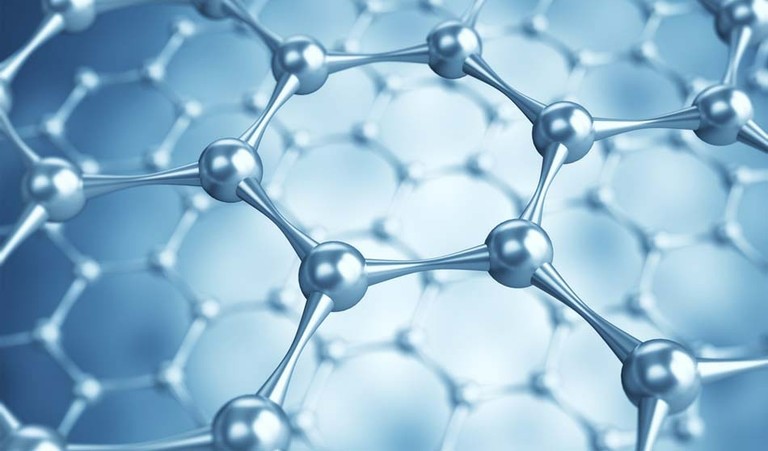
- (Graphene, AZO Nano)
Materials Science and Engineering Is To Be The Groundwork for
Technological Age and Platform for Future Progress.
- Overview
New Materials, Mechanical Engineering, and Smart Manufacturing represent an interdisciplinary field focused on creating innovative products and processes through the development of advanced materials and the integration of digital technologies, robotics, and data analytics into manufacturing systems.
Mechanical engineering provides the foundational principles, while new materials engineering offers the substance for next-generation devices, and smart manufacturing integrates these with digital tools like Industrial Internet of Things (IIoT) and AI to achieve efficiency, real-time monitoring, predictive maintenance, and automated control.
This combination drives advancements in automation, quality, and the creation of more sustainable, high-performance products across industries from aerospace to energy and healthcare.
1. New Materials:
- Definition:High-performance materials that offer superior strength, durability, corrosion resistance, and other enhanced properties compared to conventional materials.
- Examples:Advanced metals, alloys, proprietary synthetics, and multi-functional materials designed at the nanoscale.
- Role in the Field:New materials are essential for designing and enabling next-generation devices and products, with their properties directly impacting product longevity and performance.
2. Mechanical Engineering:
Definition:The discipline of engineering that applies principles of physics and mathematics to design, analyze, manufacture, and maintain mechanical systems.
Role in the Field:Provides the foundational knowledge for the design and fabrication of mechanical components, thermal-fluid systems, and dynamical systems, which are then enhanced by advanced materials and smart manufacturing techniques.
3. Smart Manufacturing:
- Definition:A broad term that encompasses factory automation, cloud-enabled manufacturing, IIoT, digital manufacturing, and the use of real-time data analytics for process monitoring and control.
4. Key Technologies:
- IIoT: Connects physical assets and people, enabling enterprise-level efficiency and sharing of information across systems.
- Digital Twins: Virtual representations of physical systems that use live data for simulation and real-time control.
- AI and Data Analytics: Used for diagnostics, prognostics (predictive maintenance), quality assurance, and optimizing control systems.
5. Benefits:
- Enhanced Communication: Breaks down silos between manufacturing systems.
- Improved Efficiency: Optimizes resource allocation, maintenance schedules, and production.
- Increased Quality: Real-time monitoring ensures product quality and process consistency.
6. Interdisciplinary Convergence:
- Material Design and Manufacturing:Creates a seamless workflow from material design to product development, using new materials to accelerate production and enhance economic value.
- Applications:Enables breakthroughs in diverse areas like advanced materials for energy storage, biomedical devices, aerospace components, and smart clothing.
- Career Opportunities:Graduates with a background in this integrated field are positioned for high-demand careers in aerospace, energy, advanced manufacturing, and materials engineering.
- The Convergence of New Materials, Mechanical Engineering, and Smart Manufacturing in the AI Era
In the AI era, new materials, mechanical engineering, and smart manufacturing are converging to create highly efficient, automated, and innovative systems.
Artificial intelligence (AI) acts as a catalyst, transforming every stage of the product lifecycle, from material discovery and design to large-scale production.
1. AI-driven new materials development:
AI is fundamentally changing the way materials are discovered, designed, and optimized, moving from traditional trial-and-error to a data-driven approach.
- Accelerated discovery: AI algorithms can analyze massive databases of material properties to predict the characteristics of novel materials. Google DeepMind's Graph Networks for Materials Exploration (Gnome) is one such tool that has been used to predict the stability of millions of new materials, significantly shortening the exploration phase for electronics and clean energy applications.
- Property optimization: Machine learning (ML) models can predict how different material compositions will perform under various conditions. This allows engineers to fine-tune material properties like strength, durability, and corrosion resistance for specific applications, greatly reducing the need for costly and time-consuming physical prototyping.
- Microstructure tailoring: AI can be used to control material microstructures during production, enabling in-situ optimization. For example, in additive manufacturing (AM), AI adjusts parameters like energy density during a build to achieve desired material properties without additional post-processing.
2. AI's impact on mechanical engineering:
Mechanical engineering is evolving beyond its traditional focus on mechanics to embrace new technologies like AI and mechatronics. AI assists mechanical engineers by enhancing simulation, design, and predictive maintenance.
- Generative design: AI can create and iterate on design options that a human engineer may not consider, leading to complex, optimized designs that are lighter, stronger, and more efficient. This is particularly valuable for applications in aerospace and automotive industries.
- Digital twins: This technology uses AI to create a virtual model of a physical product or system that is updated with real-time data from Internet of Things (IoT) sensors. Digital twins allow engineers to simulate and monitor performance, predict maintenance needs, and optimize operation throughout the product's entire lifecycle.
- Predictive maintenance: AI algorithms analyze data from sensors embedded in machinery to predict equipment failures before they occur. This minimizes unplanned downtime, lowers maintenance costs, and extends the lifespan of industrial equipment.
3. Smart manufacturing enabled by AI:
AI is a core component of Industry 4.0, transforming factories into smart, interconnected systems that can autonomously optimize production processes.
- Real-time adaptive control: AI-driven systems enable real-time monitoring and control of manufacturing processes. For example, machine vision systems with AI can detect welding defects in stainless steel parts or dimensional inconsistencies in 3D-printed components, automatically adjusting production parameters to ensure consistent quality.
- Autonomous systems: Smart factories leverage AI for self-organizing manufacturing systems that can adapt to changing demands. Features include: Self-configuration ( Machines can autonomously schedule and coordinate production to meet customized orders.) and Self-optimization (The system learns from past operations to improve efficiency dynamically.)
- Energy and resource efficiency: By continuously optimizing processes, AI contributes to more sustainable manufacturing. For example, AI can reduce electricity usage in additive manufacturing and minimize material waste by enabling near-net-shape production.
4. Case studies in high-performance industries:
The integration of AI, new materials, and smart manufacturing is already transforming high-stakes sectors like aerospace and energy.
- Aerospace: Digital twin models and real-time process monitoring enable the laser-based AM of critical titanium alloy components. The AI enhances dimensional control and reduces defects by simulating and adapting to thermal stresses during the build process.
- Energy: AI and IoT help monitor and optimize the production of high-performance materials used in energy systems, such as titanium alloys for wind turbines and engine components. This ensures consistent fatigue and corrosion resistance under harsh operating conditions.
- Automotive and batteries: AI is used to optimize the production of advanced lithium-ion batteries. By precisely controlling the material microstructure, manufacturers can enhance battery capacity and durability, helping to extend the driving range and lifespan of electric vehicles.
[More to come ...]
