
Undersea Fiber Optic Cables and the Global Internet
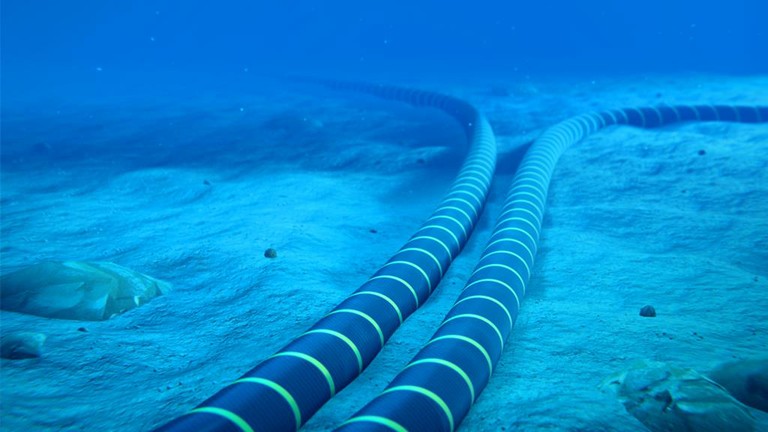
- [Undersea Fiber Cable - Shutterstock]
- Overview
Undersea fiber optic cables are the hidden backbone of the global internet, carrying over 95% of international data through light pulses in glass fibers, connecting continents for everything from streaming to finance, offering vastly superior capacity and lower latency than satellites, but facing growing geopolitical security concerns as nations and tech giants vie for control of this critical infrastructure.
These robust cables, laid on the ocean floor, are vital for economic stability, national security, and the rise of cloud computing and AI, requiring immense engineering and presenting vulnerabilities.
1. How They Work:
- Data via Light: Data travels as light pulses through incredibly thin strands of optical fiber, enabling near-instantaneous transmission.
- Physical Structure: Multiple fibers are bundled inside a cable with protective layers (gel, copper, steel) to withstand deep-sea pressure and conditions.
- Capacity: A single cable can carry terabits (Tbps) of data per second, far exceeding satellite capacity (gigabits per second).
2. Why They're Critical:
- Global Connectivity: They link continents for email, web browsing, video calls, financial transactions, and cloud services.
- Economic Engine: Essential for global finance, e-commerce, and supporting data-intensive AI and 5G networks.
- Strategic Importance: Governments and hyperscale tech companies (like Google, Microsoft) invest heavily, recognizing their role in national security and digital sovereignty, leading to increased geopolitical competition.
3. Challenges & Future:
- Vulnerability: Cables are susceptible to accidental damage (anchors, fishing) and potential adversarial threats (sabotage, data interception).
- Demand: The AI revolution is driving massive new demand, requiring more subsea capacity and new routes, like the South America-Asia-Pacific links.
- Security Focus: Protecting these "digital rails" is a key focus for cybersecurity and national defense.
<More to come ..>
