
Aeronautical and Astronautical Engineering
- (Returning Human Spaceflight To The U.S. at 3:22PM, May, 30, 2020 - SPACEX)
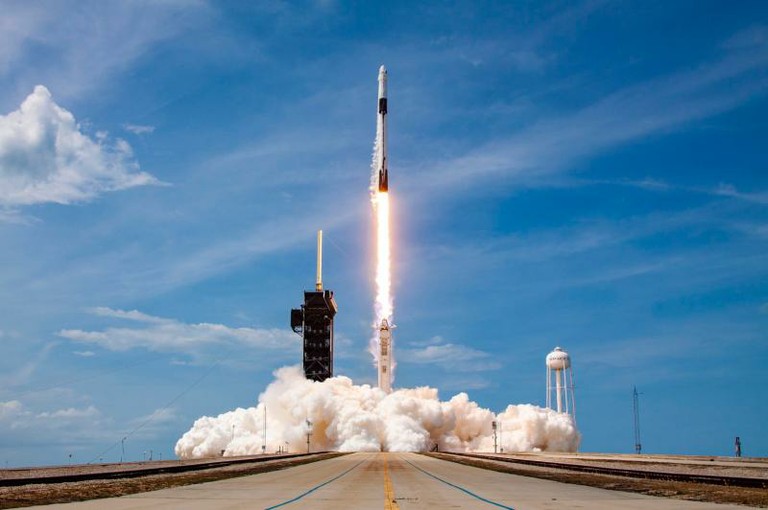
- Overview
Aerospace engineering is the broad field of designing flying machines, split into aeronautical (Earth's atmosphere, e.g., planes, drones) and astronautical (outer space, e.g., rockets, satellites) branches, requiring strong math/physics for aerodynamics, propulsion, structures, and controls, with aerospace engineers tackling both.
Aeronautical engineers focus on atmospheric flight, while astronautical engineers design space vehicles, but aerospace engineering combines them, covering everything that flies, from jets to probes.
1. Aeronautical Engineering:
- Focus: Atmospheric flight.
- What they do: Design, build, test aircraft like jets, helicopters, drones, and their propulsion/control systems.
- Key areas: Aerodynamics, fluid mechanics, thermodynamics, control theory, materials.
2. Astronautical Engineering:
- Focus: Space flight (outside the atmosphere).
- What they do: Develop spacecraft, satellites, rockets, missiles, and planetary probes, including guidance systems.
- Key areas: Orbital mechanics, rocket science, vacuum propulsion, thermal insulation.
3. Aerospace Engineering:
- Focus: The umbrella field for both.
- What they do: Design, develop, and test all flight vehicles (aircraft, spacecraft, missiles).
- Key areas: Combines skills from both aeronautics and astronautics, focusing on overall vehicle performance in atmospheric or space environments
Please refer to the following for more information:
- Wikipedia: Aerospace Engineering
- Aerospace Engineering
Aerospace engineering designs aircraft and spacecraft, split into aeronautics (atmospheric flight) and astronautics (space), focusing on systems like satellites, rockets, and defense tech for communication, navigation, climate monitoring, and exploration, with modern trends showing "democratization" of space via smaller, cheaper tech and diverse actors (governments, private firms) driving innovation in AI, debris removal, and sustainable use, while also creating new policy challenges.
1. Core Concepts:
- Aerospace Engineering: The broad field for designing, developing, testing, and making aircraft, spacecraft, missiles, and related equipment.
- Aeronautical Engineering: Deals with flight within Earth's atmosphere (planes, helicopters).
- Astronautical Engineering: Focuses on spaceflight (rockets, satellites, space stations).
- Avionics: The electronics systems within aerospace vehicles (navigation, communication).
2. Key Focus Areas:
- Design & Development: Creating flight vehicles, propulsion systems, and life support.
- Performance: Improving safety, fuel efficiency, and reducing costs.
- New Technologies: Integrating AI, quantum computing, and advanced materials.
3. The "Democratization" of Space:
- More Players: Beyond superpowers, more nations (India, African nations) and private companies (SpaceX, Blue Origin) are active.
- Lower Costs: Smaller satellites (smallsats) and reusable rockets make space accessible.
- Diverse Applications: Satellites now provide internet, Earth observation, climate tracking, GPS, and disaster management.
4. Modern Challenges & Innovations:
- Space Traffic & Debris: Increased activity creates congestion and debris, requiring new solutions like In-Orbit Servicing, Assembly, and Manufacturing (ISAM).
- Policy & Governance: Questions of sustainability, resource rights, and establishing new norms for space usage are critical.
- Critical Technologies: Space is central to national interests, driving competition in AI, advanced manufacturing, and semiconductor technology.
- [The Sombrero Galaxy - NASA]

- How is Astronautical Engineering Different from Aerospace Engineering?
Aerospace engineering is the broad field covering flight in and out of Earth's atmosphere, while astronautical engineering is the specific branch focused on spacecraft, satellites, and space exploration (beyond the atmosphere), contrasting with aeronautical engineering (within the atmosphere).
Think of it as: Aerospace = Aeronautics (air) + Astronautics (space); astronautics specializes in orbital mechanics, rockets, and deep-space vehicles, using similar core engineering principles but applied to the vacuum and extreme conditions of space.
1. Aerospace Engineering (The Umbrella):
- Definition: The overarching discipline encompassing both air and space flight.
- Focus: Design, development, and testing of vehicles and systems for both atmospheric flight (aircraft) and space flight (spacecraft).
2. Astronautical Engineering (The Specialty):
- Definition: The branch of aerospace engineering concerned with flight beyond Earth's atmosphere.
- Focus: Spacecraft, satellites, rockets, probes, orbital mechanics, and deep-space vehicles.
- Key Concepts: Gas dynamics, rocket propulsion, extreme vacuum, radiation, and mass-saving designs.
3. Key Differences Summarized:
- Environment: Aeronautical (within atmosphere) vs. Astronautical (outside atmosphere).
- Scope: Astronautics is a subset of aerospace; aerospace combines both aeronautics and astronautics.
- Tools/Physics: Astronautical engineers focus on rocket science, orbital dynamics, and managing space environments, while sharing foundational math/physics with aeronautics.
- New Frontier of Satellite Technology
The "new frontier" of satellite technology is characterized by rapid innovation driven by private companies, shifting the industry from a government-only domain to a vibrant commercial ecosystem.
Key trends involve widespread constellations of smaller satellites, the integration of advanced technologies like AI and quantum communication, and new applications such as direct-to-device connectivity and in-orbit data processing.
The "new frontier" also presents challenges, including managing an increasingly crowded orbital environment with space debris and addressing growing cybersecurity threats to critical space infrastructure.
Key advancements and trends defining this new frontier include:
- Proliferated Low Earth Orbit (LEO) Constellations: Missions are moving from a few large satellites to hundreds or thousands of smaller, lower-cost satellites. These constellations (like SpaceX's Starlink) provide global, high-speed, low-latency internet access, especially to remote or underserved regions, and enhance military resilience.
- Integration of Artificial Intelligence (AI) and Machine Learning (ML): AI is being embedded in both orbiting satellites and ground stations to enable autonomous operations, speed up decision-making, process vast amounts of data in real-time (edge computing), and improve situational awareness. There is even a reported race by companies like SpaceX and Blue Origin to build AI data centers in orbit.
- Advanced Communications: The space industry is adopting and enabling 5G-enabled networks (and beyond) to provide more reliable, higher-throughput connectivity. A significant development is Direct-to-Device (D2D) technology, which allows standard smartphones to connect directly to satellites, eliminating coverage gaps in terrestrial networks.
- Earth Observation and Climate Monitoring: Enhanced capabilities through high-resolution imaging and hyperspectral sensors allow for better monitoring of environmental changes, disaster management, agriculture efficiency, and weather forecasting, providing valuable climate intelligence.
- Quantum Communication: This emerging technology exploits quantum properties of light to provide highly secure, long-distance communication for military, government, and commercial customers, with promising increases in data rates and processing speed.
- Advanced Manufacturing and In-Orbit Servicing: Technologies like 3D printing and advanced robotics are enhancing quality and reducing costs. The future may include autonomous robots for satellite servicing and debris management, and in-orbit manufacturing of replacement parts, which is crucial for managing the increasing amount of space debris.
- Space-Based Power and Propulsion: Nuclear propulsion systems (thermal and electric) are in development to offer increased efficiency and reduced travel times for deep space missions and lunar exploration, supporting initiatives like NASA's Artemis program.
- The Future of Aeronautical and Astronautical Engineering: Emerging Trends and Technologies
The future of Aero/Astro engineering is defined by sustainability (electric flight, SAFs), autonomy (AI/ML in drones, autonomous systems), hyper/supersonic travel, Urban Air Mobility (eVTOLs), advanced materials (composites, 3D printing), and expanding commercial space (tourism, satellite constellations).
Key technologies include AI-driven design/operations, quantum computing, digital twins, and new propulsion, all aiming for faster, cleaner, safer, and more accessible air and space travel, though regulatory hurdles remain.
1. Key Emerging Trends & Technologies:
- Sustainable Aviation: Focus on reducing emissions through electric/hybrid propulsion, alternative fuels (SAFs), and eco-efficient designs.
- Urban Air Mobility (UAM): Development of electric Vertical Takeoff and Landing (eVTOL) aircraft for air taxis, changing urban transport.
- Artificial Intelligence & Autonomy: AI/ML for flight optimization, autonomous drones (UAVs), intelligent air traffic management, and AI co-pilots.
- Advanced Materials & Additive Manufacturing (3D Printing): Creating lighter, stronger, complex parts to improve efficiency and reduce costs.
- Hypersonic & Supersonic Flight: Development of faster-than-sound jets and hypersonic vehicles for rapid transport, with focus on sonic boom reduction (e.g., NASA's X-59).
- Commercial Space & Space Tourism: Booming private sector with reusable rockets, satellite mega-constellations, and lunar/Mars exploration.
- Digital Engineering: Use of Digital Twins, digital threads, and advanced simulation for faster, more efficient design and certification.
- Quantum Technology: Emerging role in secure communication and complex simulations.
- Advanced Propulsion: Beyond electric, exploring nuclear propulsion for deep space missions.
2. Impact on the Field:
- New Roles: Demand for engineers skilled in AI, sustainability, systems integration, and data science.
- Industry Transformation: Shifting towards greener, faster, and more automated systems.
- Challenges: Overcoming regulatory hurdles, ensuring safety of autonomous systems, and high costs of innovation.
[More to come ...]
