
Wind Energy
- (The Wind Energy - the US Department of Energy)
- Overview
Wind energy converts the kinetic energy of air into electricity using turbines, providing a renewable, cost-effective, and low-carbon power source that is experiencing rapid global growth.
While offering immense benefits like job creation and energy independence, its primary challenges include intermittency, noise, and visual impacts.
1. How Wind Power Works:
- Mechanism: Turbines capture kinetic energy from wind using large rotor blades.
- Conversion: The spinning blades turn a shaft connected to a generator, converting mechanical energy into electricity.
- Types: Onshore (land-based) and offshore (ocean-based) systems, with offshore providing stronger, more consistent winds.
2. Benefits of Wind Power:
- Renewable and Clean: It is an inexhaustible, emission-free source of energy.
- Cost-Effective: Land-based, utility-scale wind is one of the lowest-priced energy sources available.
- Economic Impact: The industry creates over 100,000 jobs in the U.S. and adds billions in tax/lease payments to local communities.
- High Efficiency: A single modern commercial turbine can power nearly 1,000 homes.
3. Disadvantages and Challenges:
- Intermittency: Wind is not constant; turbines cannot generate electricity 24/7.
- Environmental & Aesthetic Impact: Turbines can be noisy, visually unappealing, and sometimes impact wildlife.
- Infrastructure Costs: High initial capital costs for development and connecting to the grid.
4. Current State and Future Outlook:
- Growth: Global wind capacity reached over 1,131 GW by 2024, a 98-fold increase since 1997.
- Future: The market is rapidly expanding, with significant growth in offshore projects. Research is focused on improving turbine efficiency, recycling materials, and integrating energy storage to manage intermittency.
- Wind and Wind Turbines
Wind is generated by the sun's uneven heating of the Earth's surface, creating air movement that is captured by wind turbines to produce electricity.
Mounted on tall towers to access stronger winds, these turbines use 2–3, airplane-wing-shaped blades to create lift and drag, spinning a rotor that powers a generator.
Wind turbines generally perform better in winter months, often providing a, which is a key advantage of this renewable energy source.
1. Wind Creation: Solar energy heats the Earth unevenly; warm air rises, and cooler air rushes in to replace it, creating wind.
2. Turbine Design: Turbines are placed 100 feet (30m) or more above ground to utilize faster, less turbulent, and stronger winds.
3. How Wind Turbines Work:
- Lift: Wind flows over the curved blades, creating a low-pressure pocket on the downwind side that pulls the blade forward, causing the rotor to turn.
- Drag: The wind pushes against the front side of the blade, which is known as drag.
- Generation: The combination of strong lift and drag spins a shaft connected to a generator to create electricity.
4. Applications: Wind energy is used for generating electricity on a utility scale (powering over 1,400 homes with large turbines) or smaller, local applications.
- Wind Turbines
Wind turbines can be used as stand-alone applications, or they can be connected to a utility power grid or even combined with a photovoltaic (solar cell) system. For utility-scale (megawatt-sized) sources of wind energy, a large number of wind turbines are usually built close together to form a wind plant, also referred to as a wind farm. Several electricity providers today use wind plants to supply power to their customers.
Stand-alone wind turbines are typically used for water pumping or communications. However, homeowners, farmers, and ranchers in windy areas can also use wind turbines as a way to cut their electric bills.
Small wind systems also have potential as distributed energy resources. Distributed energy resources refer to a variety of small, modular power-generating technologies that can be combined to improve the operation of the electricity delivery system. For more information about distributed wind, visit the U.S. Department of Energy's Wind Energy Technologies Office.
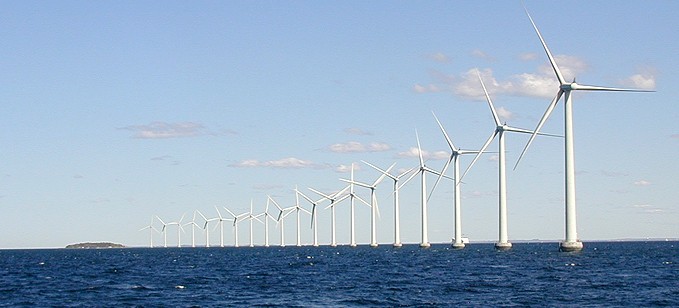
Offshore wind energy is a relatively new industry in the United States. America's first offshore wind farm, located in Rhode Island, off the coast of Block Island, powered up in December 2016. The Energy Department's Wind Vision Report shows that by 2050, offshore wind could be available in all coastal regions nationwide.
- How Do Wind Turbines Work?
Wind turbines convert kinetic energy from wind into electricity, supporting applications from local, small-scale, and residential use to massive utility-scale power generation.
They are deployed in wind farms for the grid, as distributed energy resources, in, and in hybrid configurations with solar, helping reduce reliance on fossil fuels.
Turbines generally use horizontal-axis technology, with blades that turn a generator, notes the U.S. Energy Information Administration.
Key applications of wind energy and turbines include:
- Utility-Scale Wind Plants (Wind Farms): Large, centrally managed installations, such as in Texas or Iowa, where hundreds of turbines feed electricity directly into the power grid, according to and.
- Offshore Wind Farms: Turbines placed in coastal waters, such as near Block Island, Rhode Island, leverage stronger, more consistent winds for high-capacity generation.
- Distributed Energy Resources: Smaller, often on-site turbines (<100kW) that power homes, farms, and businesses directly, with capacity to feed excess energy back into the grid, as described by the Department of Energy.
- Stand-Alone Applications: Turbines used in remote, off-grid locations for specific tasks like water pumping, communication, or battery charging.
- Hybrid Systems: Integrated systems combining wind turbines with other, often distributed energy resources like photovoltaics (solar cells) and battery storage for improved resilience, notes the Department of Energy.
- Deploy Wind Turbines
Wind turbines, which convert kinetic energy into electricity, are utilized in versatile applications ranging from utility-scale wind farms (connected to the power grid) to small-scale, stand-alone systems.
They offer a clean, renewable, and often cost-effective energy source that can be combined with solar, with growing potential for distributed,, residential, and offshore applications.
Key Aspects of Wind Turbine Applications:
- Utility-Scale (Wind Farms): Large, megawatt-sized turbines are grouped to supply utility power to the grid. These projects, including emerging offshore sites like the one in Rhode Island, are increasing across the U.S..
- Small Wind Systems: Used by homeowners, ranchers, and farmers, these systems can lower electricity bills by 50% to 90% in suitable areas.
- Distributed Energy Resources: Small, modular wind systems can be used on the "customer" side of the meter to improve local electricity delivery.
- Standalone Applications: Typically used for remote water pumping or communication systems.
2. Key Advantages:
- Efficiency & Reliability: Modern turbines convert 45-50% of wind's kinetic energy into electricity and can operate 24/7 in favorable conditions.
- Sustainability: Wind energy is non-polluting and helps reduce reliance on fossil fuels.
- The Operation and Management of Wind Energy Infrastructure
The operation and management of wind energy infrastructure, currently the leader among renewable sources, is challenged by harsh, highly variable environments that cause significant, repetitive loads on components.
As many turbines approach the end of their design life, there is an urgent need for advanced life-cycle assessment methods, specifically Structural Health Monitoring (SHM) and Non-Destructive Evaluation (NDE), to ensure reliability at both individual and fleet levels.
The integration of these advanced monitoring and AI-driven techniques enables a shift from reactive to proactive, cost-effective management of wind energy assets.
1. Key Aspects of SHM and Maintenance:
- Purpose: SHM provides early warnings on degradation, verifies design, and assists in prognostic tasks such as remaining useful lifetime (RUL) assessment.
- Monitored Parameters: Key measurements include environmental conditions, operational data, structural loads (extreme and fatigue), system vibrations, mode shapes, and stress hotspots.
- Techniques: Novel NDE techniques include acoustic emissions, ultrasonic testing, infrared thermography, and electromagnetic testing, which are increasingly applied to blades and offshore foundations.
- Maintenance Strategies: Shift from reactive to predictive maintenance (using RUL) is critical, as maintenance costs can represent 10%–20% of the total energy cost, rising to 35% at the end of a turbine's life.
2. Probabilistic AI and Machine Learning Integration:
The use of advanced AI algorithms is encouraged for wind farm-level monitoring, particularly to handle large data volumes from supervisory control and data acquisition (SCADA) systems.
- Neural Networks & Bayesian Models: These are used to model normal behavior and detect anomalies.
- Predictive Maintenance: Deep learning, such as Long Short-Term Memory (LSTM) networks, is applied to estimate the remaining useful life (RUL) of components like bearings and blades.
- Operational Optimization: AI, including random forests and support vector machines, helps analyze wind patterns to optimize blade pitch and yaw, reducing stress.
3. Challenges and Future Directions:
- Data Scarcity: While AI models are powerful, they often struggle with a lack of historical data regarding actual failures.
- Offshore Complexity: Offshore wind turbine (OWT) support structures require complex monitoring to withstand waves, currents, and soil degradation.
- End-of-Life: Research is focused on managing the decommissioning and potential repowering of aging fleets, including recycling fiberglass blades.
[More to come ...]
