
Cellular Networks
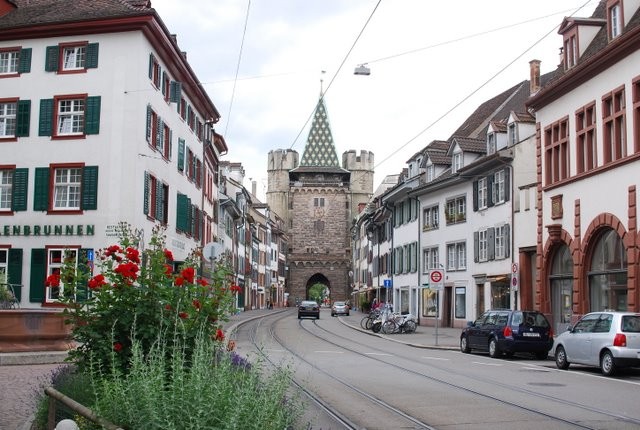
- (Basel, Switzerland - Alvin Wei-Cheng Wong)
- Overview
5G and beyond cellular networks represent the evolution of mobile communication, moving past speed to enable immersive, real-time experiences with ultra-low latency (1ms), massive capacity (1M devices/km²), and enhanced reliability, leveraging technologies like millimeter waves (mmWave) and Massive-MIMO for futuristic applications like digital twins, holographic communication, and pervasive AI, with 6G promising even higher speeds and integration of sensing for truly transformative connectivity.
1. Key Aspects of 5G & Beyond:
- Ultra-High Speeds & Capacity: Theoretical speeds up to 20 Gbps, supporting a million devices per square kilometer for massive IoT.
- Ultra-Low Latency: Near-instantaneous response times (as low as 1ms) crucial for autonomous vehicles, remote surgery, and real-time AR/VR.
2. Advanced Technologies:
- Millimeter Waves (mmWave): High-frequency bands for dense urban areas, offering massive bandwidth.
- Massive-MIMO: Many antennas to focus signals (beamforming) for better coverage and capacity.
- Network Slicing: Creating dedicated virtual networks for specific needs (e.g., public safety).
- Edge Computing: Processing data closer to the user to reduce delays.
3. Enabling New Applications:
- Hyper-realistic Communication: Tactile, audio, and visual telepresence.
- Digital Twins: Virtual replicas of real-world systems.
- Extended Reality (XR): Immersive VR/AR experiences.
- Smart Cities & Industry 4.0: Precision agriculture, smart grids, remote healthcare.
4. The Road to 6G (Beyond 5G):
- 5G Advanced: Enhancements to 5G focusing on reliability, efficiency, and more complex IoT.
- 6G (Next Frontier): Expected around 2030, aiming for speeds of 100 Gbps+, integrating AI natively, and enabling ubiquitous sensing for truly immersive, AI-driven worlds.
- 5G and Beyond Cellular Network Technology: Evolution, Types, and Future
5G and beyond cellular networks represent the 5th and 6th generations of mobile technology, designed to provide ultra-high speeds, minimal latency, and massive device connectivity, connecting over 1 million devices per square kilometer.
While 5G relies on sub-6 GHz and millimeter-wave (mmWave) frequencies to deliver 10-20 Gbps peak speeds, "Beyond 5G" (B5G) and future 6G networks aim for terabit-per-second (Tbps) speeds, AI-native integration, and Terahertz (THz) spectrum usage to enable fully autonomous systems, holographic communication, and 3D immersive experiences.
Key Aspects of 5G and Beyond:
1. 5G Technology Capabilities (Current):
- Performance: 5G offers up to 20 Gbps peak data rates and, with 5G Standalone (5G SA), reduces latency to as low as 1 millisecond.
- Architecture: Utilizes 5G New Radio (NR) and a cloud-native, service-based architecture (SBA).
- Key Techniques: Employs Massive MIMO (multiple-input, multiple-output) for high-density connections and beamforming to focus signals, reducing interference.
- Network Slicing: Allows operators to create independent, virtualized networks for specific use cases (e.g., IoT vs. streaming) on the same physical infrastructure.
- Multi-access Edge Computing (MEC): Processes data closer to the user, enhancing performance for time-sensitive applications.
2. Beyond 5G (B5G) and 6G (Future):
- Timeline: 6G is expected to emerge around 2030, with 5G-Advanced (5G-A) serving as a bridge technology.
- Terahertz (THz) Communication: 6G will move beyond mmWave into the THz spectrum, allowing for unparalleled data capacity.
- AI-Native Networks: Networks will be self-optimizing and AI-driven, utilizing machine learning to manage resources, predict traffic, and bolster security without human intervention.
- Integrated Sensing and Communication (ISAC): Networks will not only transmit data but also act as radar, sensing the physical environment (e.g., detecting objects, gestures).
- Non-Terrestrial Networks (NTNs): Seamless integration with satellite, drone, and high-altitude platform systems to provide global coverage.
3. Transformative Applications:
- Autonomous Systems: High-precision, real-time communication for self-driving cars, drone swarms, and robot navigation.
- Immersive Experience: Holographic telepresence, 3D digital spaces, and advanced mixed reality (MR).
- Industrial IoT (IIoT): 6G will support trillions of low-power or zero-energy devices (ZEC), enabling advanced smart factories and supply chain automation.
- Healthcare: Real-time remote surgeries and haptic feedback, allowing doctors to feel or sense distant patients.
4. Challenges in Future Networks:
- Infrastructure Costs: The need for high-density small cell sites requires significant investment.
- Energy Consumption: 6G networks, with their increased data processing, face high power requirements, demanding more energy-efficient designs.
- Security: Increased, 24/7 connectivity raises, and will require, advanced, quantum-safe encryption.
- Spectrum Scarcity: While exploring higher frequencies, managing the propagation loss of THz waves and ensuring harmonized global spectrum usage remains critical.
- [A Typical Cellular Network - ITU]
- Channels in Cellular Systems
In cellular, each cell phone communicates with its base station. Usually, this is done over two channels, one downstream and one upstream.
Or sometimes the system uses "time division duplexing" (TDD), which shares one channel for up and down.
And, multiple users in each cell can share the down and up links, with digital protocols such as TDMA (time division), CDMA (code division), or OFDMA and FBMC.
If the two users are on the same cell system, they usually will not be in the same cell. Cells are small. Say, something like 1 or 2 km square, depending. Some can be a lot smaller, especially as we go to 4G and then 5G. Whatever the case may be, cell phones communicate only to base stations, in the normal case.
So, whether cell system users are in the same cellular network or not, most of the time a so-called "backhaul network" becomes involved. The fixed, cabled or wireless network, which ties together the cells and ties the cellular system to the telephone system.
- Structure of the Mobile Phone Cellular Network
A simple view of the cellular mobile-radio network consists of the following:
- A network of radio base stations forming the base station subsystem.
- The core circuit switched network for handling voice calls and text
- A packet switched network for handling mobile data
- The public switched telephone network to connect subscribers to the wider telephony network
There are a number of ways to provide mobile cellular network but it is generally broken down into two main terms, macrocell and small cell. Both provide radio coverage but in very different ways making each more effective in different situations.
Despite their similarities, what differentiates the outdoor small cells is that microcells are for capacity and macrocells are for coverage. This is why in urban areas that are densely populated, such as New York City’s Wall Street, you will commonly find microcells used to create a cellular network that can cope with the high demand that macrocells cannot cope with.
There are still challenges as macrocells can overpower microcells because they are more dominant which causes interference. To stop this from happening power needs to be carefully set so not to overpower neighbouring microcells. This needs to be reviewed every time more microcells are deployed as this changes the power balance.
[More to come ...]
